
 English
 العربية
 Español
 Français
 русский
  Português
 Tiếng Việt
 Melayu
 Türkçe
 Indonesia
In building materials industry forums, many plant owners focus first on the "initial quotation" when planning a solid waste brick production line. Squeezing the purchase price to the bare minimum may seem like a win, but from our years of experience in heavy machinery manufacturing, for equipment designed to run for over a decade, the price on the invoice is only the tip of the iceberg. The "hidden costs" beneath the surface are what truly determine a brick plant's profitability.
Today, we dissect the three most overlooked "cost devourers" in solid waste brick production lines.
Hidden Cost 1: The Invisible "Electricity Guzzler"
Conventional brick making machines mostly use standard induction motors, which continuously consume power as long as they are running—even during idle intervals while waiting for material feed. This "power hog" keeps spinning at no-load speed, turning wasted electricity directly into higher operating costs.
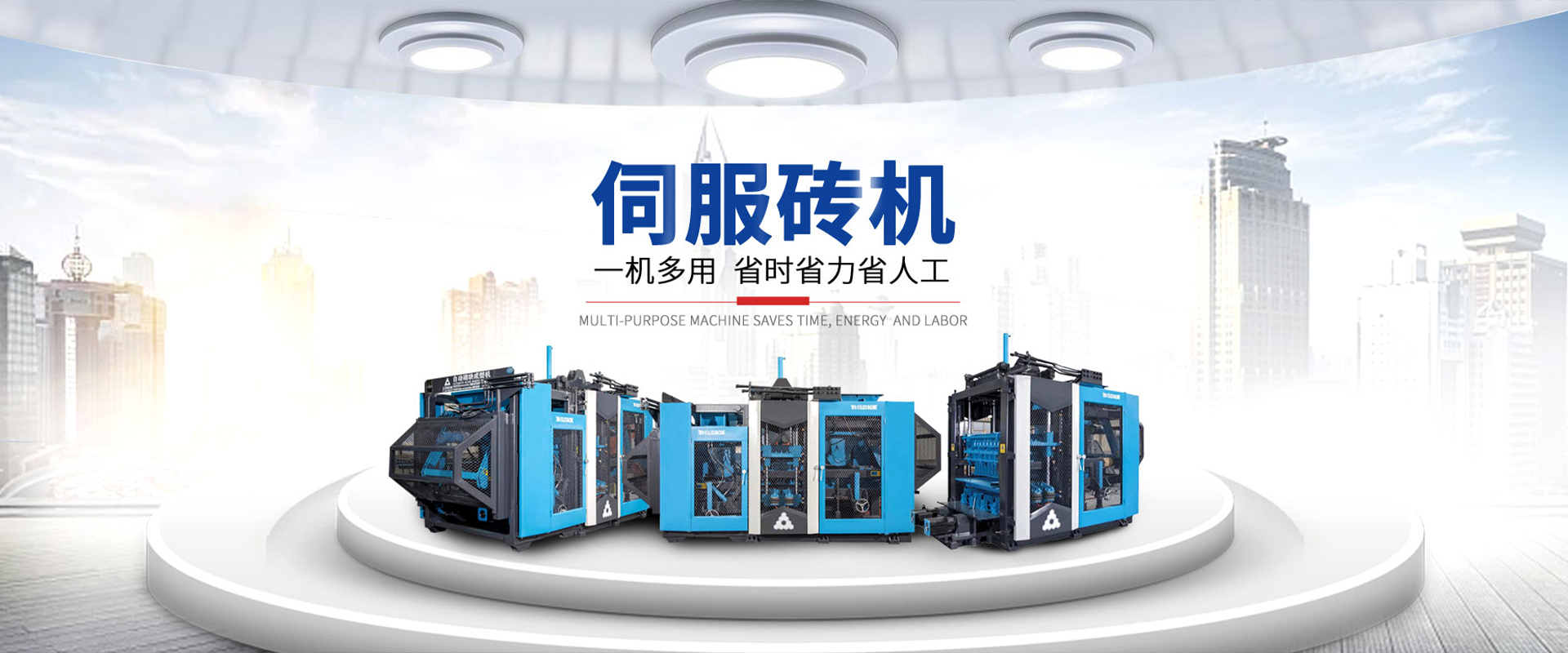
To address this pain point, the industry's cutting-edge solution is the adoption of servo drive technology. Take S.L Machinery's high-end servo vibration and compression integrated machine as an example: its core power is managed by servo motors, featuring "on-demand output" characteristics. The machine delivers powerful vibration force during the pressing cycle, but during non-pressing actions (such as demolding and waiting intervals), the motor rapidly decelerates or enters an ultra-low-power standby mode. Over years of operation, the cumulative electricity savings translate directly into net profit.
.jpg "压缩图片1(7).jpg")
Hidden Cost 2: "Picky" Equipment Drives Up Raw Material Expenses
Many plant owners aim to utilize low-cost construction waste or fly ash for brick production, but cheaper machines lack sufficient vibration force and structural rigidity. When high proportions of solid waste are incorporated, the pressed bricks often fail to meet strength requirements. To ensure product quality, the plant is forced to purchase expensive high-quality river sand as a supplement—completely defeating the original cost-saving purpose.
True heavy-duty capability lies in a "non-picky" design. S.L Machinery's forming mainframe is built with special high-strength steel, and its high-rigidity frame withstands years of high-frequency vibration without deformation. Coupled with the servo-vibration technology, the high-frequency directional vibration force instantly "liquefies" the solid waste aggregates to fill the mold completely, while powerful downward pressure expels microscopic air pockets. Even with a high percentage of industrial by-products, the machine consistently produces high-strength permeable bricks and PC imitation stone bricks, turning low-cost "waste" into high-margin products.

Hidden Cost 3: High Scrap Rates from Green-Brick Transfer
Freshly pressed bricks (green bricks) have just begun their hydration reaction and remain relatively fragile. Inferior production lines often rely on manual forklift transfer; the jolts from starting and stopping easily induce micro-cracks within the green bricks. These invisible "internal injuries" are barely detectable at first but eventually manifest as scrap during final inspection, wasting all the electricity and materials invested upstream.
To thoroughly eliminate this issue, the production line must incorporate an intelligent logistics loop. S.L Machinery equips the downstream end of the line with a fully automatic transfer and curing system. The newly demolded green bricks are immediately handed over to automated equipment such as rack system, which transport them along precisely calculated, smooth trajectories directly into the curing kiln. This "non-stop, floor-free" automated transfer eliminates the jolt risks inherent in manual handling, firmly locking in a high yield rate across the entire line.
.jpg "压缩图片3(1).jpg")
In today's fiercely competitive market, the "cost-effectiveness" of heavy machinery is by no means the lowest purchase price—it is the combination of low energy consumption, material flexibility, and high yield sustained over the next decade. With robust materials as the foundation and intelligent systems as the brain, we build long-term, stable "cash-flow" systems for building material enterprises. This is the pragmatic philosophy that S.L Machinery has always adhered to.


CONTACT
 +86-18859963776
 +86-595-86786132
 allen@sl-machine.com
Copyright © 2024 QUANZHOU CITY SANLIAN MACHINERY MANUFACTURE CO., LTD. All Rights Reserved.