
 English
 العربية
 Español
 Français
 русский
  Português
 Tiếng Việt
 Melayu
 Türkçe
 Indonesia
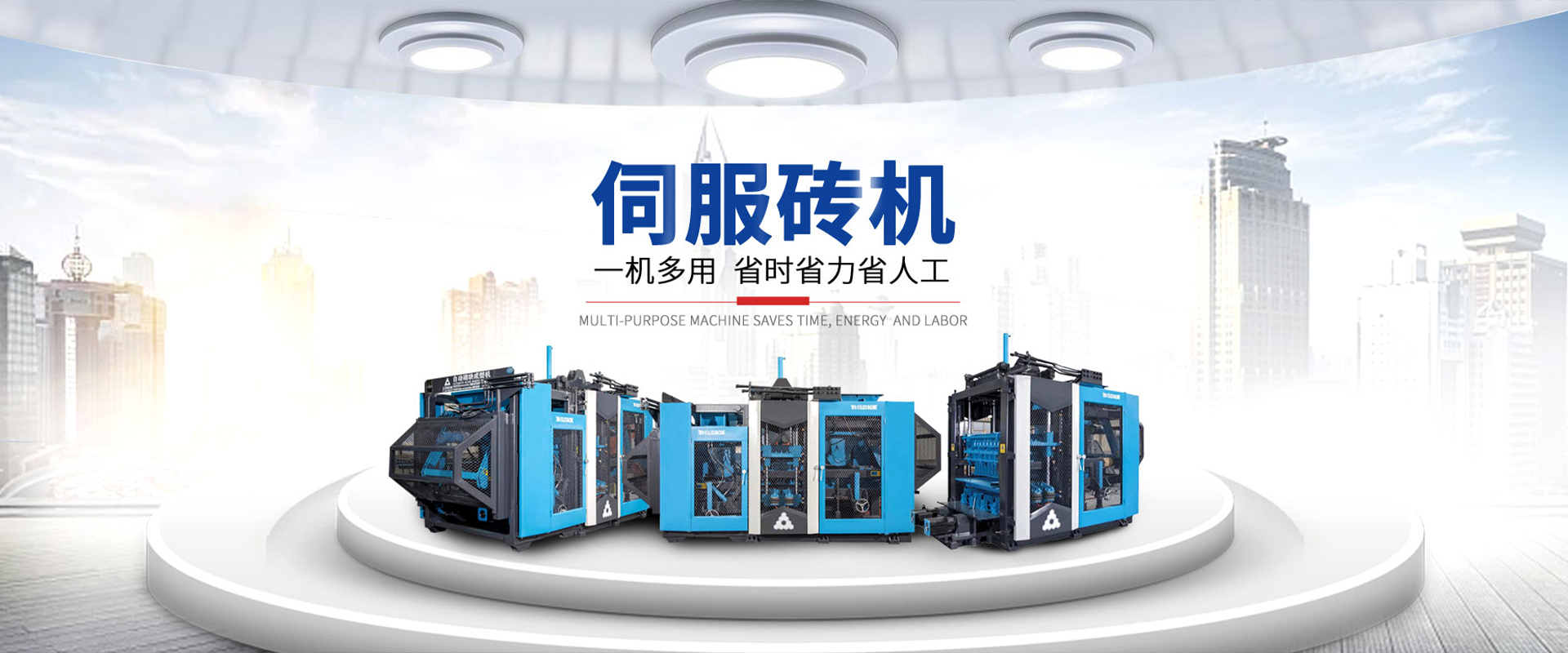
In the conventional perception of many people, heavy building-materials machinery consists of “rough workhorses”: as long as they are powered up and supplied with sufficient horsepower and pressure, they can continuously press aggregates into bricks.
In reality, however, the more industrial manufacturing advances toward high-end and precision production, the more sensitive equipment becomes to changes in the external environment. China has a vast territory and an enormous climatic range. If you survey building-materials plants across the country, you will find that owners face completely different “regional torments”: in Northeast China at minus twenty degrees Celsius, machines become “stiff in their joints” from freezing; during the plum rain season in South China, raw materials are as wet as “sludge.”
When conventional brick-making equipment encounters these extreme climates, it often exhibits severe maladaptation. At best, production line speed drops and scrap rates soar; at worst, the line shuts down entirely.
Climate has long become a make-or-break quality-control line standing in front of building-materials plants. Today, from a hardcore popular-science perspective, we will conduct a detailed teardown: how do truly high-end brick production lines transform the mysticism of “depending on the weather” into precise “climate-adaptive” data?
.jpg "图片1压缩(1).jpg")
1. The Fluid Mechanics Challenge of Northeast China’s Severe Winter: “Industrial Blood” That Does Not Freeze Stiff
In high-cold northern regions, the greatest technical obstacle to building a plant in winter is not the strength of the steel framework, but the hydraulic system.
Hydraulic oil is the “blood” of the main molding press. In fluid mechanics, the viscosity of hydraulic oil is extremely sensitive to temperature. When the ambient temperature plunges below zero, the hydraulic oil in the reservoir of ordinary equipment becomes highly viscous, and its fluidity drops precipitously. What happens if the machine is forced to start under such conditions? Commands have already been issued, but the cylinder responds sluggishly, and the exciting force that should erupt instantaneously becomes feeble. The bricks pressed in this way fail to meet density requirements; moreover, because of delayed hydraulic pressure feedback, hydraulic pipeline rupture is extremely likely. Many brick plants in the north are forced to shut down and “hibernate” throughout winter.
Faced with such extreme low temperatures, Quanzhou Sanlian Machinery did not choose to let customers “tough it out” during R&D. Instead, it implanted an intelligent temperature-control adaptive system into the equipment’s hydraulic hub.
This is not simply a heating band strapped around the oil tank. This system uses high-precision temperature sensors to monitor oil temperature in real time:
“Intelligent Warm-Up” in Extreme Cold: When the oil temperature is detected to be below a set threshold, the system automatically starts a preheating program to rapidly and gently heat the hydraulic oil to its optimal operating viscosity before the main motor operates under high load.
“Forced Heat Dissipation” Under High-Frequency Operation: Conversely, when high summer temperatures or prolonged high-frequency pressing cause oil temperature to become too high, the system seamlessly switches to an air-cooled or water-cooled circulation system to prevent excessive oil thinning and internal pressure leakage.
Whether the plant exterior is covered in ice and snow or scorched by the sun, the main unit’s hydraulic hub always remains at peak operating condition. Movements are crisp and decisive, and molding pressure responds in milliseconds.
2. The Formulation Nightmare of South China’s Plum Rain Season: Refusing to “Add Water by Feel”
If winter in the north tests the machine’s “movement,” the plum rain season in the south tests the system’s “brain.”
The molding of non-fired bricks has extremely stringent requirements for raw material moisture content. One percent too little moisture, and the brick body becomes dry, loose, and highly prone to corner chipping; one percent too much, and the brick sticks tightly to the mold during demolding, or even softens and deforms. During the month-long plum rain season in the Jiangnan region, the daily moisture content of sand and gravel, construction waste, tailings, and other aggregates stored in the open fluctuates dramatically. Conventional brick plants rely entirely on the mixing operator’s “visual observation” and “hand feel” to decide how much water to add. If an inexperienced worker takes over, scrap bricks pile up like a mountain along the entire production line.
To completely cross this quality-control line, sensors must replace the naked eye, and algorithms must replace hand feel.
At the front end of batching and mixing, Sanlian Machinery introduced a microwave moisture-measurement feedback system with a highly geeky spirit. This system is like a “moisture radar” installed inside the mixer:
Real-Time Detection, Dynamic Calculation: A specially designed microwave probe can penetrate materials and calculate the current initial moisture content of the aggregate in real time and with high precision.
Closed-Loop Feedback, Automatic Correction: The probe instantly transmits data back to the PLC central control system. Based on the preset brick-type formula, the system brain automatically calculates, within an extremely short time, “how much additional water is needed for this batch” or “whether the mixing time needs to be extended,” and precisely controls the water supply valve.
Every mixing cycle is a dynamic correction based on current climate data. No matter how heavy the rain outside or how wet the aggregate, the mixed material fed into the molding press always maintains the perfect molding moisture content.
Conclusion: The Underlying Foundation of High-End Intelligent Manufacturing Is Environmental Adaptability
It is not difficult to produce impressive data in a climate-controlled laboratory. What is difficult is continuously delivering high-standard products year after year on harsh construction sites filled with dust, extreme heat, and severe cold.
When evaluating the value of a modern brick-making equipment set, we should not stop at its steel tonnage. Through deep integration of intelligent temperature control and microwave moisture-measurement feedback technologies, Sanlian Machinery has given cold steel the ability to perceive the environment and self-adjust. This powerful “climate-adaptive” chassis is precisely the core logic that enables China’s high-end equipment to advance confidently into Middle Eastern deserts and Southeast Asian rainforests, standing rock-solid amid various complex infrastructure environments.


CONTACT
 +86-18859963776
 +86-595-86786132
 allen@sl-machine.com
Copyright © 2024 QUANZHOU CITY SANLIAN MACHINERY MANUFACTURE CO., LTD. All Rights Reserved.